
The key to a slowed-down life lies not in radical renunciation, but in conscious course-settings toward higher quality and intention.
- Sustainability begins with small but effective changes in everyday life that do not exclude comfort.
- Regional and seasonal products often have a better ecological balance than imported “organic” alternatives.
- Conscious breaks from the digital world are more crucial for satisfaction than constant productivity hacks.
Recommendation: Start in just one area of life—whether in the bathroom, the kitchen, or with your digital habits—and experience how a small change can have a big impact.
The alarm rings, emails flood the inbox, and the day seems fully booked even before the first coffee. For many stressed urban dwellers in Germany, this is the daily reality. The longing for deceleration, for “Slow Living,” is growing, yet the idea of having to overhaul one’s entire life to achieve it feels daunting. The usual advice—meditate more, work less, move to the countryside—often feels like unattainable ideals that don’t fit into a busy schedule.
But what if Slow Living doesn’t mean dropping out of the system, but using it to your advantage? What if it’s not about radical renunciation, but a conscious realignment? The core of this approach is a simple but powerful thought: the consistent choice of quality over quantity. It’s about developing an internal “quality filter” that asks with every decision: “Does this truly bring me more value, more joy, more peace?” This shift in perspective is not another task on your to-do list, but a tool to shorten that list.
This article is not another appeal for complete consumption renunciation. It is a guide for manageable adjustments. We will not only touch upon what you can do on the surface but also why these small changes have such a large impact on your well-being and the environment. It’s about finding the hidden levers in everyday life that create maximum satisfaction with minimal effort.
From the clever selection of your products to the design of your digital downtimes—the following sections offer you concrete strategies tested in Germany. Consider them your personal modular system for a life that feels not just slower, but above all, more meaningful.
Table of Contents: Your Guide to Conscious Deceleration
- Which 3 solid products replace 10 plastic bottles without you sacrificing comfort?
- Why is the apple from the local market ecologically more sensible than the organic banana?
- Is renting clothes for events worth it, or is buying cheaper after all?
- The digital habit you must drop to be satisfied with your life again
- How do you find a Repair Café near you and what can you actually save there?
- Glass, recyclate, or bioplastic: Which packaging is truly sustainable in the German recycling system?
- How can you save 50% on food costs in Germany by using the hostel kitchen?
- How do you achieve the German “Natural Glow” through lifestyle changes alone?
Which 3 solid products replace 10 plastic bottles without you sacrificing comfort?
The first and perhaps easiest step toward deceleration and sustainability begins in the bathroom. It is often a place of unconscious consumption, filled with countless plastic bottles. Switching to solid products is a simple adjustment with an enormous impact. Instead of fighting through a sea of options, focus on a few high-quality alternatives. A solid shampoo, a solid body wash, and a solid facial cleanser form the basis for a plastic-free bathroom.
The efficiency of these products is impressive. According to the North Rhine-Westphalia Consumer Advice Center, a single shampoo bar can replace up to three plastic bottles. Extrapolated across the three basic products, you can easily save ten or more bottles per year. You don’t have to sacrifice your usual comfort at all. Modern solid products lather richly, smell pleasant, and are tailored to various hair and skin types.
Case Study: Duschbrocken from Stuttgart
The Stuttgart-based startup “Duschbrocken” shows how successful this model can be. With only 22 employees, the company has already saved over 2 million plastic bottles. Their core product, a 2-in-1 “shower block” for skin and hair, replaces two conventional products and lasts for about 40 applications. This example proves: conscious consumption and entrepreneurial success in Germany are not mutually exclusive but can inspire each other.
The transition initially requires a small investment in the right accessories, such as a soap dish with a drain or a small bag for drying, to ensure the longevity of the products. However, this small, one-time action not only reduces waste but also the mental baggage that comes with constantly choosing between dozens of shampoo bottles at the drugstore. It is the embodiment of the principle: less is more.
Why is the apple from the local market ecologically more sensible than the organic banana?
The “organic” label often suggests an environmentally friendly choice to us. But in the sense of Slow Living, it is about more than just certificates; it is about resource intelligence. A decisive factor that is often overlooked is the origin and seasonality of our food. This is where it becomes clear why a conventional apple from a regional farm in autumn is often the more sustainable choice than an organic banana from South America.
The ecological footprint of a food item is made up of many factors: cultivation, transport, cooling, and packaging. While the organic banana is grown without pesticides, it travels thousands of kilometers on refrigerated container ships to end up in German supermarkets. This transport consumes enormous amounts of energy and causes high CO2 emissions. The regional apple, on the other hand, has a minimal transport distance. Even if grown conventionally, its overall ecological balance is often significantly better, especially when bought seasonally.

As the image suggests, true sustainability lies in the connection to our immediate surroundings. Shopping at the weekly market or directly from the producer not only strengthens the local economy but also sharpens our awareness of the seasons. We learn to appreciate what is currently growing and develop a deeper gratitude for our food. Slow Living in the kitchen therefore means setting the quality filter not just on “organic,” but primarily on “regional” and “seasonal.” It is an invitation to rediscover exoticism in the simple and the nearby.
Is renting clothes for events worth it, or is buying cheaper after all?
Special occasions like weddings, gala evenings, or important business appointments often require a special outfit. The reflex is usually to buy a new, expensive piece of clothing that disappears into the closet after being worn once. This cycle of buying, wearing, and forgetting is not only expensive and resource-intensive but also creates mental stress. An intelligent adjustment in the sense of Slow Living here is the concept of clothing rental, which is becoming increasingly popular in Germany.
At first glance, renting might seem like an expense without lasting value. However, a closer look quickly reveals the financial and practical advantages. Instead of spending hundreds of euros on a designer piece, you only pay a fraction for one-time use. Cleaning and maintenance costs are completely eliminated. Perhaps the greatest benefit, however, is the gained freedom and flexibility. You can choose the perfect, current style for every occasion without cluttering your closet or committing to a piece long-term.
The following comparison, based on analyses by consumer protection organizations, illustrates the differences:
| Criterion | Renting Clothes | Buying Clothes |
|---|---|---|
| Average cost per event | 50-150€ | 200-500€ |
| Closet space | 0 cm² | 30-50 cm² per piece |
| Maintenance effort | None | Cleaning: 15-30€ per piece |
| Style relevance | Always current | Often outdated after 2-3 years |
| Mental load | Low | High (decision stress) |
With a 70/30 wardrobe strategy, you combine a high-quality basic wardrobe with rented statement pieces for special occasions.
– German Society for Sustainable Consumption, Sustainable Fashion Report 2024
This strategy embodies the quality filter perfectly: invest in timeless, long-lasting basics that you wear often and gladly, and supplement them with rented highlights. In this way, you enjoy fashionable variety without burdening your closet or your conscience. It is a conscious step away from possession toward experience.
The digital habit you must drop to be satisfied with your life again
In our quest for deceleration, we often overlook the biggest accelerator of our daily lives: constant digital availability and passive content consumption. The habit that needs to be dropped is not the smartphone itself, but reactive and unconscious scrolling. Every free minute—in the elevator, at the supermarket checkout, before falling asleep—is filled with aimless swiping through feeds. This fragments our attention, prevents real recovery, and feeds the feeling of constantly missing out.
The desire for a counter-model is measurable. A Google analysis shows that views for ‘Slow Living’ videos increased fourfold in 2020 alone. People are actively seeking ways to escape digital overstimulation. The key, however, lies not in radical digital abstinence, but in creating “intentional friction.” Make it consciously harder to scroll aimlessly and easier to experience present moments.
Here are some simple but effective strategies to reset this course:
- Establish fixed communication slots: Answer emails and messages only at two or three fixed times a day. Outside these slots, the inbox remains closed. The brain learns that it can focus on other things.
- The “10,000 steps without a smartphone” rule: Make it a habit to complete your daily walk or commute consciously without digital accompaniment. These micro-breaks are crucial for mental regeneration.
- Cultivate conscious boredom: Replace the consumption of productivity content with moments where you consciously “do nothing.” Observe your surroundings, let your thoughts wander. Often, the most creative ideas emerge during these phases.
Your Action Plan: Digital Decluttering in 5 Steps
- List points of contact: For one week, note down every app and device that sends you notifications (email, social media, news apps, etc.).
- Perform an inventory: Deactivate all non-essential notifications. Keep only calls or messages from close contacts.
- Align with values: For every app, ask yourself: “Does this app enrich my life or steal my time?” Uninstall everything that doesn’t clearly belong in the first category.
- Recognize patterns: Identify the moments when you reflexively reach for your phone (e.g., during boredom, stress). Replace this reflex with an alternative action (e.g., three deep breaths, looking out the window).
- Create an integration plan: Set fixed phone-free zones and times (e.g., no phone at the dinner table, airplane mode one hour before sleep).
How do you find a Repair Café near you and what can you actually save there?
Our modern consumer society is based on the principle of throwing things away. A broken toaster, a sweater with a hole, a wobbly chair—the first impulse is often to buy something new. Slow Living challenges us to question this impulse and rethink the relationship with our possessions. Repair Cafés are the pulsing heart of this counter-movement. They are not commercial workshops, but neighborhood meeting points supported by volunteers where people repair things together.
Finding such a place in Germany is surprisingly easy. Platforms like the “Network of Repair Initiatives” or local city agendas list the locations. The Consumer Advice Center states that there are currently over 1,750 Repair Cafés active in Germany. So, the chance is high that there is an initiative near you. There, you will find not only tools but, above all, the knowledge and patience of volunteer tinkerers.
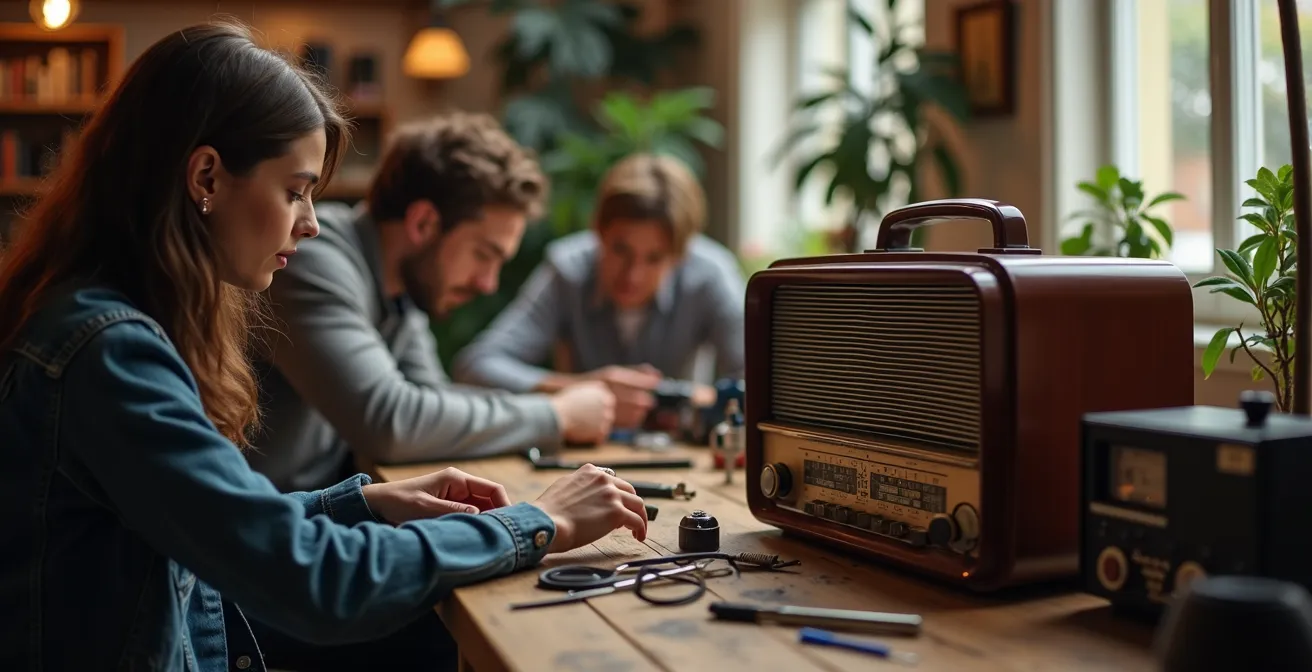
What can you really save there? The range is enormous. Classics include small household appliances (coffee machines, vacuum cleaners), consumer electronics, bicycles, and textiles. But the value lies not just in the material result. Visiting a Repair Café is an educational experience. You learn how devices are built, lose the fear of technology, and experience a strong sense of self-efficacy when a device thought to be dead comes back to life.
Case Study: Repair Café at the Haus der Eigenarbeit (HEi) Munich
The HEi in Munich documents its successes precisely: during regular events, around 60 defective items are examined. The average repair rate is an impressive 60%, with a record of 75% in September 2023. This shows that a large part of what we throw away could certainly be saved with a little help and the right tools. Repairing is sustainability in practice and an act of appreciation toward resources and craftsmanship.
Glass, recyclate, or bioplastic: Which packaging is truly sustainable in the German recycling system?
Reaching for the “right” packaging in the supermarket has become a science in itself. We want to act sustainably, yet the reality of the German recycling system is complex. Slow Living here means making informed decisions and not being blinded by greenwashing. Let’s look at the three most common alternatives: glass, recyclate, and bioplastic.
Glass is considered high-quality and easily recyclable. However, the distinction between multi-use (returnable) and single-use is crucial. A returnable glass bottle that is refilled up to 50 times has an excellent ecological balance as long as transport distances are short. Single-use glass, on the other hand, must be melted down and reshaped using a lot of energy. Due to its high weight, its balance during transport is often worse than that of lightweight plastic.
Recyclate—plastic made from recycled material—is a very good option. Packaging made from 100% recyclate (recognizable by seals or labels) closes the material cycle and saves significant amounts of crude oil and energy compared to the production of new plastic. The German deposit system for PET bottles is a pioneer here and ensures high recycling rates.
The biggest trap is often the supposedly environmentally friendly bioplastic. It suggests compostability and a natural origin. But the reality looks different.
Most bioplastics do not rot quickly enough in German industrial composting plants; they are sorted out as contaminants and burned – a seemingly sustainable alternative turns out to be a deceptive package.
– Experts from the Federal Environment Agency
The best packaging is and remains no packaging. Unpackaged stores or buying loose fruit and vegetables are always the first choice. Where that’s not possible, the priority list for the conscious consumer in Germany is: 1. Multi-use (especially glass), 2. High recyclate content, 3. Single-use glass, and only then new plastic. Bioplastic should be avoided until the recycling systems for it are mature.
How can you save 50% on food costs in Germany by using the hostel kitchen?
Slow Travel is more than just slow journeying; it is an attitude. It’s about diving deeper into a place rather than just checking off sights. One of the simplest and most effective methods to implement this while saving your budget is the conscious use of communal kitchens in hostels or youth hostels. Instead of eating out every evening, cooking becomes part of the travel experience.
The financial savings are substantial. While a simple dinner in a restaurant in a German city quickly costs €15-20, you can prepare a delicious meal for a few euros with a targeted purchase at the local market. A saving of 50% or more on food costs is realistic. The freed-up budget can instead be invested in experiences like museum visits or guided tours. But the true value goes beyond money.
By cooking together in hostels, travelers not only save money but also make international contacts – a core aspect of Slow Travel.
– German Youth Hostel Association, Sustainable Travel in Germany 2024
Cooking connects people. You strike up conversations with other travelers, exchange recipes and stories, and experience an authentic form of community. To keep the effort low, “one-pot dishes” that require few ingredients and minimal dishes are particularly suitable. Here are some proven and cheap ideas for the hostel kitchen:
- Pasta Aglio e Olio: Pasta, garlic, olive oil, chili, parsley – approx. €3 per portion.
- Vegetable Rice Stir-fry: Rice, seasonal market vegetables or frozen vegetables, soy sauce, egg – approx. €2.50 per portion.
- Lentil Stew: Red lentils, onion, tomato paste, spices – approx. €2 per portion.
- Oatmeal Breakfast: Oats, banana, nuts – approx. €1.50 per portion, replaces expensive café breakfasts.
Summary
- Slow Living is not a matter of radical renunciation, but of conscious decision-making for quality and intention.
- Sustainability in everyday life is achieved through small, manageable adjustments in areas such as consumption, nutrition, and digital use.
- Regional and seasonal options are often ecologically more sensible than imported “organic” products, highlighting the importance of resource intelligence.
How do you achieve the German “Natural Glow” through lifestyle changes alone?
In a world full of expensive serums and complicated skincare routines, Slow Living promises a different path to radiant skin: the “Natural Glow” that comes from within. This approach is based on the realization that our skin is a mirror of our lifestyle. Instead of covering symptoms with cosmetics, it’s about tackling the causes at the root—through nutrition, movement, and targeted rituals deeply anchored in German health culture.
Two simple but powerful pillars of this concept are proper nutrition and the stimulation of blood circulation. An anti-inflammatory diet, rich in omega-3 fatty acids, is the basis for a healthy skin barrier. A classic example from German naturopathy is particularly effective here.
Case Study: The Budwig Cream
Developed by the German pharmacist Dr. Johanna Budwig, the combination of flaxseed oil and quark is a powerhouse for the skin. Flaxseed oil is one of the richest plant sources of omega-3 fatty acids, which have been proven to reduce inflammation in the body and improve skin elasticity. In combination with the protein from the quark, the fatty acids are optimally absorbed by the body. A spoonful of this simple cream for breakfast can sustainably support skin health from the inside out.
The second pillar is the promotion of microcirculation. Cold pours or alternating showers according to Sebastian Kneipp are a traditional German method to stimulate circulation. The cold stimulus causes blood vessels to constrict and then widen again. This training effect optimally supplies the skin with oxygen and nutrients, leading to a fresh, rosy complexion—completely without highlighters.

The “Natural Glow” is thus not a product you buy, but the result of loving attention to your own body. It is the sum of small, daily decisions: the nourishing breakfast, the short, cold pour in the morning, the walk in the fresh air. It is the ultimate form of Slow Living—the cultivation of one’s own life energy.
The path to a slowed-down life in a hectic everyday world is not a sprint, but a journey that begins with the first conscious step. It’s not about being perfect, but about starting. Choose one of the adjustments presented here that feels easiest for you and integrate it into your routine. You will feel how this small change triggers a positive chain reaction—for your well-being, your wallet, and our environment. Start today to fill your everyday life with more intention and quality.