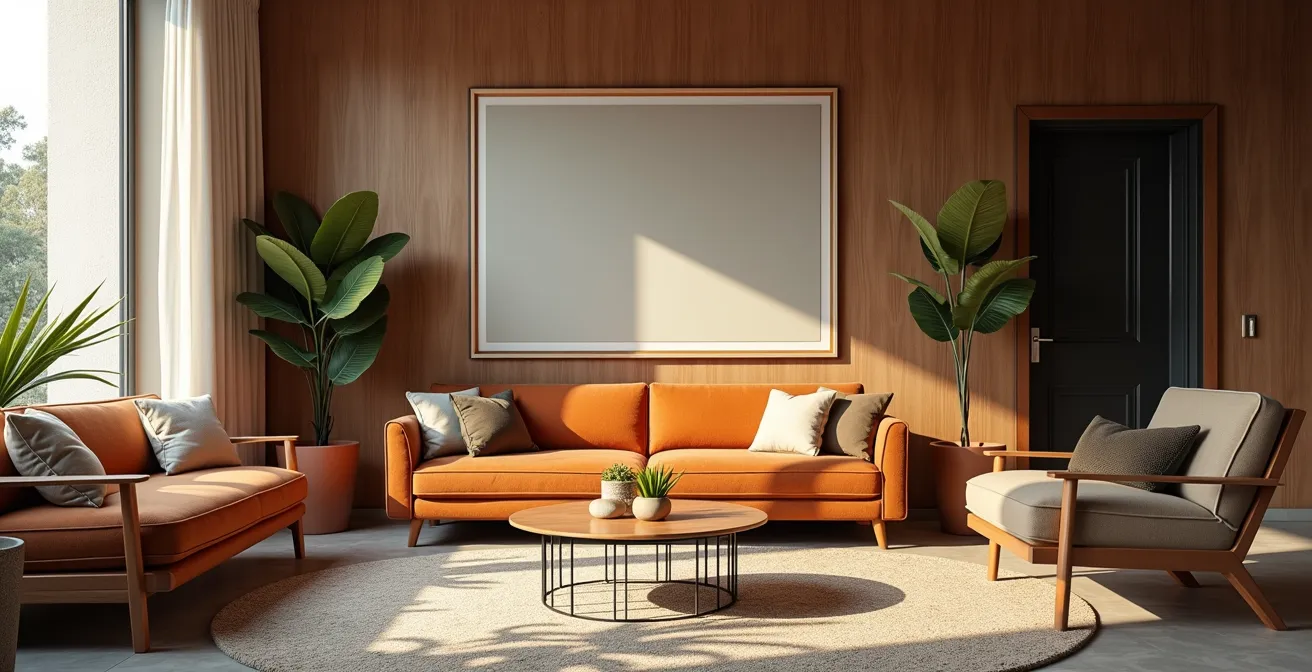
The authenticity of a boutique hotel lies not in perfect aesthetics, but in its palpable soul – a curated holistic masterpiece of history, personality, and conscious design decisions.
- A genuine interior tells a unique story of its location, rather than merely copying reproducible trends (“Insta-chic”).
- True luxury manifests not in room size, but in “experience density”: high-quality materials, thoughtful details, and service that comes from the heart.
Recommendation: Train your eye to recognize the owner’s signature and question the functionality behind the design. Only then will you find places with true character.
For discerning travelers, the search for the perfect hotel has long been more than just booking a bed. It is the search for a place with character, an atmosphere that inspires, and an experience that lingers in the memory. Everywhere, properties are cropping up calling themselves “boutique,” yet often they hide nothing more than a standardized design template that couldn’t be more interchangeable. You see the same velvet sofas, the same brass lamps, the same forced coolness. The question arises: How do you distinguish a soulless copy from an authentic gem?
The usual criteria – a small number of rooms or a “unique” design – fall short. As a hotel interior designer, I know that the true essence of a boutique experience lies deeper. It isn’t always visible at first glance; it must be captured with trained senses. It’s about the haptic quality of a door handle, the thoughtful lighting mood in the bathroom, or the palpable passion of the host. But what if the true art lies not in staging perfection, but in telling a story with all its charming rough edges?
This guide takes you behind the scenes. We deconstruct the elements that define a genuine boutique hotel – from the narrative power of the interior to the invisible luxury of service and the telltale design traps. You will learn to separate the wheat from the chaff and find places that are not just an overnight stay, but an enrichment.
To help you recognize the fine but decisive differences, we have structured the key questions and observations in this article for you. The following overview guides you through the individual aspects that will help you identify a true boutique jewel.
Table of Contents: A Look Behind the Boutique Facade
- Does the interior truly tell the story of the place, or is it just interchangeable “Insta-chic”?
- Why are boutique rooms often smaller, and how does service justify the price?
- Can you feel the difference in hospitality when the owner is at the front desk?
- The design element in the bathroom that looks great but makes usage a nightmare
- How do you secure that one room with the freestanding bathtub at no extra charge?
- What does the perfect 24-hour plan for fashionistas in Berlin-Mitte look like?
- Jack Wolfskin or Hugo Boss: Where is the line between practical and stylish in Germany?
- How to combine Michelin-star cuisine and designer shopping in Düsseldorf for a weekend?
Does the interior truly tell the story of the place, or is it just interchangeable “Insta-chic”?
A true boutique hotel is a mirror of its surroundings. Its design is not an imported template, but a profound interpretation of local culture, history, or architecture. It possesses an unmistakable design signature. In contrast, “Insta-chic” draws from a global catalog of trends that could look the same anywhere – from Berlin to Bali. The result is an aesthetically pleasing but ultimately soulless shell. The challenge for the traveler is to distinguish this authentic narrative from the mere backdrop.
The German hotel landscape is diverse; according to current figures, there are over 6,700 classified accommodation providers in Germany, but only a small portion truly lives the boutique philosophy. Pay attention to the details: Are local materials like slate from the Hunsrück or wood from the Black Forest used? Does the art on the walls come from local artists, or are they generic posters? An authentic interior has haptic intelligence; you can feel the quality and the history of the objects. It is the small, charming imperfections – a creaking floorboard in an old building, a handmade ceramic that isn’t perfectly symmetrical – that create character and prove that this is a place with a past and personality, not just a product for the market.
Your Test Plan for Checking Authenticity
- The “Object Biography” Test: Specifically ask staff about the origin of three striking pieces of furniture. A real story is detailed; a made-up one is vague.
- The Material Check: Touch the surfaces. Do the wood, stone, or fabric feel real and high-quality? Look for local materials instead of global standards.
- The “Imperfection Probe”: Look for charming “flaws” or traces of time. Perfection is often a sign of industrial manufacturing, not craftsmanship.
- The Art Examination: Inspect the art. Is there information about the artist? Is there a local connection, or are they interchangeable prints without context?
Why are boutique rooms often smaller, and how does service justify the price?
The equation “more square meters = more luxury” is a relic of standardized chain hôtellerie. A true boutique hotel reverses this logic and focuses on the concept of “experience density.” It’s not about how much empty space is offered, but how much thoughtful quality, atmosphere, and functionality is packed into that space. A smaller room where every inch is curated – from the custom built-in wardrobe to the perfectly positioned reading light and the scent concept – offers a far richer experience than a massive but generic suite.
The price premium is justified not by area, but by invisible luxury. This includes the quality of the mattress ensuring a restful sleep, the heavy oak door that closes with a solid thud guaranteeing peace, or the selection of local delicacies in the minibar. These are investments in the guest’s well-being, not in mere representation. A study using the example of Boutique Hotel N° 14 in Hachenburg shows how four individually designed rooms with high-quality box spring beds and a personal touch create a higher experience density than standardized chain hotels. Luxury here is palpable, not just measurable.
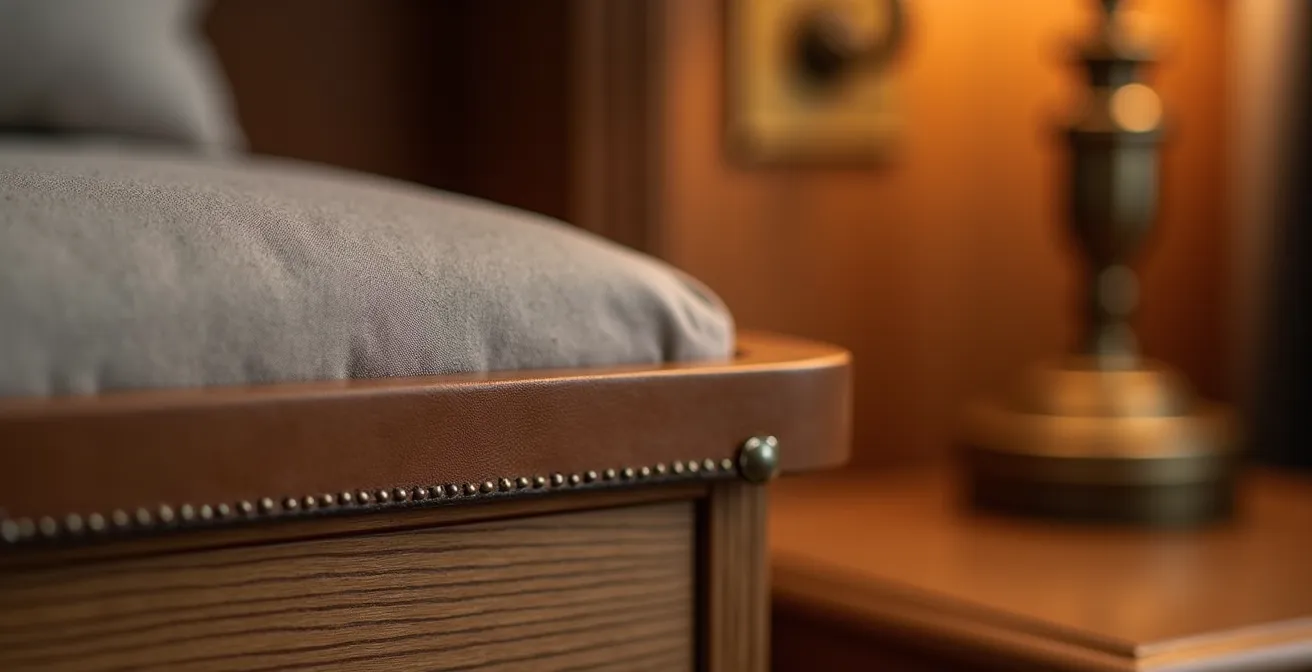
As this image shows, the focus is on tactile quality. The fine stitching of the leather, the grain of the wood, the cool feel of solid metal – these are the details that create an atmosphere of value and care. It is this concentration on the essentials that constitutes the true value and justifies a higher room rate. You aren’t paying for space; you are investing in a curated experience.
Can you feel the difference in hospitality when the owner is at the front desk?
Absolutely. The presence of the owner or a visionary host is often the beating heart of an authentic boutique hotel. While standardized service protocols and anonymous employees define the image in chain hotels, owner-managed properties foster a culture of personal hospitality. Here, service is not a rote process but an expression of a personal vision. The owner didn’t just build the house; they live it. Their passion and attention to detail transfer to the entire team, creating an atmosphere that is authentic, warm, and unobtrusive.
This personal signature shows in many facets: in the handwritten welcome note, the proactive recommendation for the small, owner-operated restaurant around the corner instead of a tourist trap, or genuine interest in the guest’s well-being. An excellent example is the hotel “The Dude” in Berlin. Here, the owner and his colleague furnished the house corner by corner like their own home. This “vision transfer” effect ensures the team doesn’t act according to a manual but understands and lives the house’s philosophy intuitively. The guest is treated not as a room number, but as a personal guest of the house.
This attitude is particularly evident in the willingness to act creatively and flexibly. As the managing director of the Amalienhof in Weimar aptly put it in a statement:
In extraordinary times, we must find new ways. For the Amalienhof operating company, ‘C’ has never stood for crisis, but always for creativity.
– Managing Director, Amalienhof Weimar, HOGAPAGE News
This mentality is the decisive difference. It is the ability to respond individually to wishes and solve problems with creativity instead of rigid rules that makes the stay unforgettable.
The design element in the bathroom that looks great but makes usage a nightmare
As an interior designer, I see the bathroom as the ultimate test of good hotel design. This is where aesthetics collide hardest with functionality. Unfortunately, the photogenic image for Instagram often triumphs over the guest’s actual comfort. A freestanding bathtub may be a luxurious statement, but if getting in and out becomes an acrobatic exercise and there is no shelf for soap or a book, it is a classic design trap. The same applies to minimalist faucets where you have to experiment for minutes just to figure out how to regulate the water temperature.
These poor decisions are a clear indicator that the designer or hotelier did not think of the space from the user’s perspective. A telltale detail is often the lighting: a single dramatic spotlight over the mirror might look good in photos, but it casts harsh shadows on the face, making makeup or shaving impossible. True design excellence shows in the subtle perfection of function: intuitive operation, ample storage space, glare-free and flattering light, and hooks in the right places. These are the invisible details that make a stay pleasant.
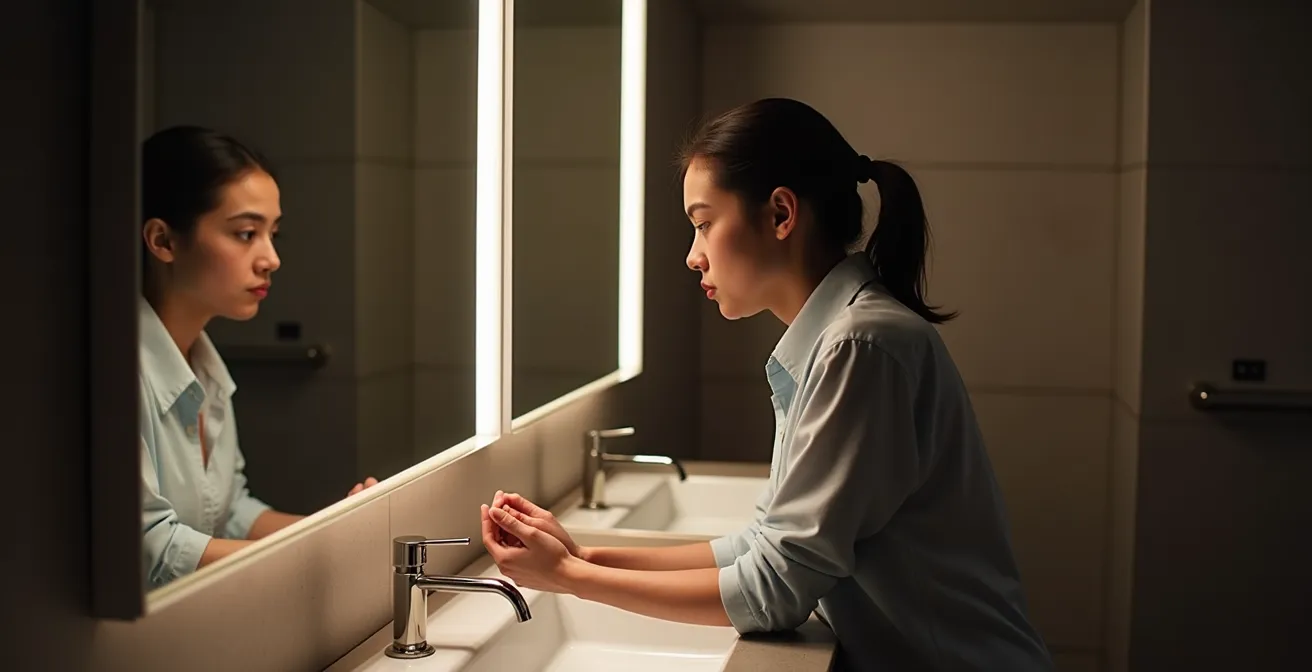
The following overview summarizes some of the most common design traps in hotel bathrooms. An analysis of spectacular design hotels in Germany shows that these problems can occur even in highly praised properties.
| Design Element | Visual Effect | Practical Issue |
|---|---|---|
| Vessel Sink | Modern elegance | Water splashes everywhere |
| Minimalist Faucets | Clean look | No clear hot/cold marking |
| Freestanding Bathtub | Luxurious statement | Difficult entry/exit |
| Design Spot over Mirror | Dramatic lighting | Harsh shadows while grooming |
How do you secure that one room with the freestanding bathtub at no extra charge?
The good news is: the personal and flexible nature of true boutique hotels also opens up opportunities for the guest. While in anonymous hotel chains an upgrade request often gets lost in the computer-aided booking system, in an owner-managed house, you have the chance to establish a direct human connection. The key is to present yourself not as an anonymous booking code, but as a person with a story and a special request. Direct contact is crucial here.
Forget standardized inquiries via booking portals. Find the hotel’s direct phone number and ask to speak with the reservation manager or even the manager. Here are three proven tactics:
- The “Personal Story” Tactic: Call the hotel directly and mention the special occasion for your trip – an anniversary, a birthday, a honeymoon. An authentic reason creates a personal connection and increases the hotel’s willingness to please you.
- The “Social Media Proof”: Show that you’ve done your homework. Mention that you saw a picture of the specific room (e.g., with the freestanding tub) on Instagram and were thrilled by that exact design. This signals appreciation for the hotel’s curatorial work.
- Off-Season Flexibility: Book anti-cyclically (e.g., Sunday to Monday instead of the weekend) and politely ask about the possibility of an upgrade if the hotel is not fully booked. Your flexibility is often rewarded.
This personal approach can work wonders, as many guests’ experiences show. One traveler reported from their stay in Munich:
Tucked away in a quiet, discrete passage just off the Marienplatz, in a stylish, warm and friendly boutique hotel, we found our home for 4 days in Munich.
– Guest, TripAdvisor
It was exactly this personal level, like mentioning an anniversary, that led to a free upgrade to the suite with the coveted freestanding bathtub in this case. It proves that in a true boutique hotel, the relationship with the guest counts for more than rigid price lists.
What does the perfect 24-hour plan for fashionistas in Berlin-Mitte look like?
For fashion-conscious travelers, a hotel is more than just a place to sleep; it is the base, the starting point, and the curatorial compass for exploring a city. A standout boutique hotel in a creative district like Berlin-Mitte does not see itself as passive accommodation, but as an active insider guide. It uses its local network to open doors for its guests that would otherwise remain closed. The perfect day here doesn’t start with a tourist flyer, but with a conversation with the concierge, who is part of the local scene themselves.
A prime example is Casa Camper in Berlin-Mitte. With its location surrounded by galleries, bars, and vintage shops, it positions itself as a base for explorers. An ideal 24-hour plan could look like this: The morning begins with coffee in the hotel’s own lounge with panoramic views, followed by a hotel-arranged private studio visit with a local designer. After a light lunch in a trendy café recommended personally by the hotel manager, it’s off to curated shopping in concept stores and exclusive pop-ups whose schedules the hotel knows. The evening is crowned with a reservation at a hard-to-access restaurant before ending the day with a drink at the hotel bar.
The hotel acts here as the key to the city. It takes care of organization, uses its contacts for personal shopping or stylist consultations, and ensures a seamless process. The guest doesn’t experience the superficial tourist version of the city but dives deep into the authentic, creative energy of Berlin. The hotel transforms from a service provider into an experience curator who orchestrates a perfect, stylish day.
Jack Wolfskin or Hugo Boss: Where is the line between practical and stylish in Germany?
The German mentality is often associated with a preference for functionality and practicality – sometimes at the expense of style. This dichotomy between “Jack Wolfskin” (practicality) and “Hugo Boss” (elegance) is also reflected in the hotel industry. Many hotels sacrifice aesthetics for function or vice versa. But the philosophy of an excellent boutique hotel is precisely to resolve these perceived opposites. It proves that thoughtful functionality can be the highest form of style.
A true boutique hotel is like a bespoke suit, not functional clothing off the rack. It adapts perfectly to the guest’s needs without losing its aesthetic identity. The Louis Hotel in Munich’s old town is an outstanding example. It combines a highly practical location at the Viktualienmarkt with an elegant, timeless design featuring Parisian metro tiles and fine woods. It is authentically Bavarian without falling into Oktoberfest clichés. Here, it is proven that “practical” doesn’t have to mean “boring” and “stylish” doesn’t have to be “impractical.”
This synthesis shows in the details: a desk that not only looks good but also features cleverly integrated power outlets. A wardrobe that isn’t just a design statement but also offers enough space for two suitcases. A lighting concept that is both atmospheric for the evening and bright enough for working. The art lies in offering tailor-made solutions instead of ready-to-wear. A hotel that masters this balancing act has understood the essence of true luxury: the effortless fusion of form and function.
The Essentials in Brief
- Recognize authenticity by the story told, not by trend compliance.
- True luxury is measured in “experience density” and invisible details, not square footage.
- The owner’s personal signature is the heart of true hospitality.
- Good design is always functional; watch out for telltale design traps, especially in the bathroom.
How to combine Michelin-star cuisine and designer shopping in Düsseldorf for a weekend?
A weekend that combines culinary highlights with an exclusive shopping experience requires more than just good reservations – it requires perfect choreography. Cities like Düsseldorf, with their density of designer boutiques on Königsallee and an impressive dining scene, are the ideal stage for this. After all, the exclusive group of only 10 restaurants with three Michelin stars belongs to the top of German gastronomy, and many more award-winning kitchens are within reach. A first-class boutique hotel acts as a director here, holding all the strings for a seamless and unforgettable experience.
The key to perfect synergy lies in delegating the logistics entirely to the hotel. The experience begins with a concierge briefing, where the hotel owner or a long-time employee doesn’t give standard tips but creates a customized plan based on your preferences. They can arrange private shopping appointments at jewelers on the “Kö” before official opening hours or reserve a coveted “Chef’s Table” in a Michelin-starred restaurant. True mastery is shown in the seamless connection: while you enjoy your exclusive dinner, the hotel organizes the pickup of your purchases and their secure storage in your room. An in-house driving service ensures punctual and stylish transfers between stops.
This level of proactive service transforms a potentially stressful trip into pure pleasure. You don’t have to worry about schedules, transport, or the safety of your valuable purchases. The hotel anticipates your needs and creates a cocoon of comfort where you can focus entirely on enjoyment. It is this staging of a perfect weekend that makes the difference between a good hotel and an extraordinary one.
Use this knowledge in your next travel planning. Don’t just ask for a room, but look for an experience curator who will turn your weekend in Düsseldorf or another metropolis into an unforgettable holistic work of art. Evaluate hotels from now on with the eyes of a designer and find the places that possess a real soul.
Frequently Asked Questions about Boutique Hotels
What special services do Berlin boutique hotels offer for those interested in fashion?
Many properties in creative districts like Berlin-Mitte offer specialized services. These include personal shopping services where a stylist accompanies you, exclusive visits to the studios of local designers that are not open to the public, as well as preferred reservations in trendy scene restaurants.
Can the hotel provide contacts to local designers?
Yes, that is a key feature of a well-networked boutique hotel. Established houses often maintain close and personal relationships with the local creative scene. They can arrange private appointments in showrooms for their guests or establish contact with designers to allow a unique insight into their work.
Are there special fashion packages?
Some boutique hotels put together special offers for fashion-conscious guests. Such “Fashion Weekend Packages” can include a curated shopping tour of selected boutiques, personal style advice from an expert, or even access to exclusive fashion events taking place during the stay.