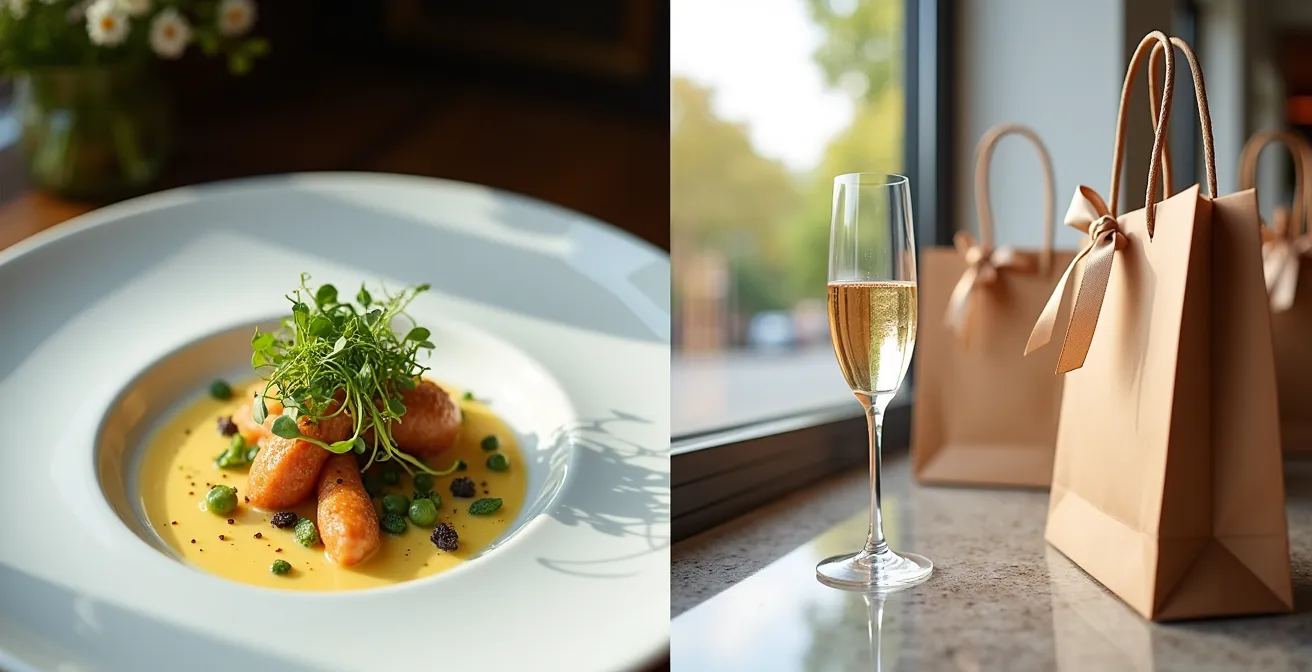
The ultimate luxury weekend in Germany is not a matter of checking off addresses, but a curated staging of taste and craftsmanship.
- The proximity of top-tier restaurants to luxury shopping miles is no coincidence, but part of an urban taste ecosystem for a discerning clientele.
- The choice of city—whether traditional Munich or creative Berlin—defines the character of your experience and should match your personal style.
Recommendation: Do not view shopping and fine dining as separate activities, but as two facets of a holistic cultural experience to truly discover the elegant side of German metropolises.
The desire for an unforgettable weekend in a German metropolis often leads to a familiar itinerary: a stroll along magnificent shopping streets, followed by dinner at a highly acclaimed restaurant. One visits the Königsallee in Düsseldorf, the Kurfürstendamm in Berlin, or the Maximilianstrasse in Munich and books a table at a restaurant with a good reputation. Yet, often a feeling remains of having only scratched the surface—of having checked off a list rather than having had a truly exclusive experience. The true art of luxury travel lies not in visiting the most expensive places, but in understanding their deeper connection.
What if the key to an extraordinary experience lay not in separation, but in the deliberate combination of these two worlds? What if fashion and gastronomy were understood not as separate program points, but as expressions of the same philosophy: an appreciation for outstanding craftsmanship, creative vision, and personal staging? This understanding transforms a simple city trip into a curated experience. It’s about appreciating the fine leather of a handbag with the same connoisseurship as the composition of ingredients on a plate. It’s about discovering a holistic taste ecosystem where boutiques and bistros are in constant dialogue.
This guide goes beyond merely listing addresses. It decodes the synergies between high fashion and haute cuisine and shows how to design your next luxury weekend in Germany as a cohesive work of art—from strategic planning in Berlin to the philosophical question of style that shapes the German concept of luxury.
Table of Contents: Fine Dining and Designer Shopping in German Metropolises
- Why are the best restaurants often located in direct proximity to luxury shopping miles?
- What does the perfect 24-hour plan for fashionistas in Berlin-Mitte look like?
- Munich’s Maximilianstrasse or Berlin’s Ku’damm: Where is high-end shopping more worthwhile?
- The feature by which you can recognize that a “high-end restaurant” is just a tourist trap
- When is the best time for a visit during Berlin Fashion Week?
- Frankfurt or Berlin: Which city offers the better clubbing experience for the over-30s?
- Why is the “White Gold” in the Zwinger globally unique and so valuable?
- Why is “Less is More” considered the golden rule for the classic German business look?
Why are the best restaurants often located in direct proximity to luxury shopping miles?
The geographical proximity of Michelin-starred restaurants to the most exclusive shopping streets is far more than a happy coincidence; it is the foundation of an urban taste ecosystem. This symbiosis arises from a shared target group: a discerning, affluent clientele that seeks excellence, quality, and a touch of extravagance in both fashion and culinary matters. A day dedicated to acquiring a timeless fashion classic finds its perfect conclusion in an ambiance that reflects the same values of precision and creativity.
Düsseldorf is a prime example of this. The city, which according to the 2024 Guide Michelin has over 9 Michelin-starred restaurants, concentrates a large part of this culinary excellence around its luxurious heart. The Königsallee acts as a gravitational center. While the flagship stores of global luxury brands form the main artery, a curated landscape of concept stores, galleries, and those very restaurants that promise an equally sophisticated experience emerges in the quieter side streets and the adjacent Carlstadt district. This ecosystem allows for a seamless transition from the aesthetic pleasure of shopping to the sensory enjoyment of haute cuisine, without a break in the experience. It is a carefully choreographed world for connoisseurs.
What does the perfect 24-hour plan for fashionistas in Berlin-Mitte look like?
Berlin-Mitte embodies the dynamic connection of avant-garde fashion, art, and sophisticated nonchalance like no other place in Germany. A perfect day here is less a rigid schedule and more a fluid staging of discoveries. It’s about drifting between established designer addresses and the hidden ateliers that make up the city’s creative pulse. The key lies in structuring the day so that shopping, culture, and cuisine interlock seamlessly to create a holistic Berlin experience.
An ideal 24-hour cycle could look like this, with each stop preparing the transition to the next. The morning belongs to the boutiques, the afternoon to the galleries and concept stores, while the evening is dedicated to the culinary and social crowning achievement. This is not a tourist marathon, but a curated journey through the heart of modern German lifestyle.
- Morning (10 AM – 1 PM): Start with targeted shopping at Quartier 206 for classic elegance, or explore Torstrasse and Mulackstrasse for avant-garde fashion and innovative concept stores.
- Lunch Break (1 PM – 3 PM): A light lunch in the restaurant of the Hotel de Rome or in one of the trendy, minimalist cafés in Mitte serves as a stylish refreshment.
- Afternoon (3 PM – 6 PM): Continue the exploration at Andreas Murkudis, whose store is an art installation in itself, or visit other smaller designer boutiques.
- Golden Hour (6 PM – 8 PM): An aperitif at the bar of the Hotel de Rome marks the elegant transition from day to night and offers a spectacular view over the city.
- Evening (8 PM – 11 PM): Crown the day with a fine dining experience at Grill Royal, the hotspot of the art and fashion scene, or venture into an experimental dinner at CODA, Germany’s only two-Michelin-starred dessert restaurant.
- Late Evening (from 11 PM): Wind down with excellent cocktails in one of the exclusive bars or at a rooftop location overlooking the lights of the capital.
Munich’s Maximilianstrasse or Berlin’s Ku’damm: Where is high-end shopping more worthwhile?
The decision between Munich and Berlin for a luxury shopping weekend is less a question of quantity and more one of character. It is a choice between two different philosophies of luxury. While Munich’s Maximilianstrasse stands for established, representative elegance—often referred to as “old money”—Berlin’s Kurfürstendamm and its side streets embody a mix of international glamour and the raw creativity of the capital, more often attributed to “new money.” The question is not where there is more, but which atmosphere best reflects your own style.
To make the right choice, a direct comparison of the two famous miles helps. The following analysis, based on a comparative look by Falstaff Travel, highlights the decisive differences in character, brand offerings, and the cultural framework that shapes the shopping experience.
| Criterion | Maximilianstrasse Munich | Ku’damm Berlin |
|---|---|---|
| Character | Established, representative luxury (‘old money’) | Mix of international glamour and creative scene (‘new money’) |
| Top Brands | Highest density of international luxury brands | Flagship stores plus emerging designers in side streets |
| Cultural Framework | Proximity to Opera and Residence (classic) | KaDeWe and photo galleries like C/O Berlin (urban-modern) |
| Shopping Experience | Exclusivity and tradition | Potential for discovering new designers |
| Atmosphere | Historic boulevards, classical architecture | Lively mix of tradition and modernity |
Ultimately, the choice is personal. Are you looking for discrete exclusivity and a classic ambiance framed by visits to the opera and the Residence? Then Munich is your destination. Are you drawn to a place where, alongside global flagship stores, you can also discover the next big name in fashion, embedded in a pulsating, urban culture? Then Berlin will exceed your expectations.
The feature by which you can recognize that a “high-end restaurant” is just a tourist trap
In a country where the 2024 Guide Michelin Germany awards a total of 340 restaurants with Michelin stars, the density of genuine top-tier cuisine is enormously high. However, especially in tourist hotspots, there is the danger of falling for so-called “high-end restaurants” that merely build a facade of luxury but offer no substance. A trained eye and knowledge of certain red flags are essential to distinguish authentic quality from a staging for unsuspecting visitors. True excellence is often quieter and requires no loud promotion.
Genuine top-tier cuisine is characterized by focus, seasonality, and expertise. A restaurant that tries to cater to every taste with an overloaded menu usually has none of its own. The ability of the staff to answer detailed questions about origin and preparation is an infallible sign of passion and professionalism. A restaurant that is proud of its products will be happy to share this information rather than hide it. The following checklist helps you separate the wheat from the chaff and ensure that your money is invested in real craftsmanship and not a costly illusion.
Checklist: Warning Signs for Culinary Tourist Traps
- Analyze the Menu: Check if the menu is excessively long and mixes many different styles of cuisine (e.g., Italian, Asian, German). Real top-tier cuisine is focused.
- Check Seasonality and Origin: Look for seasonal dishes. If these are missing or there is no information about the origin of the ingredients, it’s an alarm signal.
- Test the Staff: Ask a specific question about the origin of the fish or a wine on the list. If the staff cannot answer competently, expertise is lacking.
- Evaluate Location and Presentation: Be skeptical of restaurants directly in front of a major landmark, especially if “touts” are aggressively soliciting on the street or the menu is illustrated with photos of the dishes.
- Read Reviews Critically: Note whether a restaurant finds many vague positive reviews on general portals but no mention at all in recognized trade media (such as Michelin, Gault&Millau).
By observing these points, you sharpen your instinct for true quality and can unerringly distinguish a city’s gastronomic gems from its traps.
When is the best time for a visit during Berlin Fashion Week?
Berlin Fashion Week is undoubtedly a magnet for fashion enthusiasts. However, the “best” time for a visit depends heavily on what one is looking for. For the non-accredited but style-conscious traveler, the time during the main shows is often not the most rewarding. The city is overcrowded, hotel prices reach peak levels, and the most exclusive events take place behind closed doors. The strategically smarter approach lies in utilizing the energy of Fashion Week without submitting to its dictate. Berlin Fashion Week will take place on two dates in 2025: from January 31 to February 3 and from July 14 to 17, allowing for long-term planning.
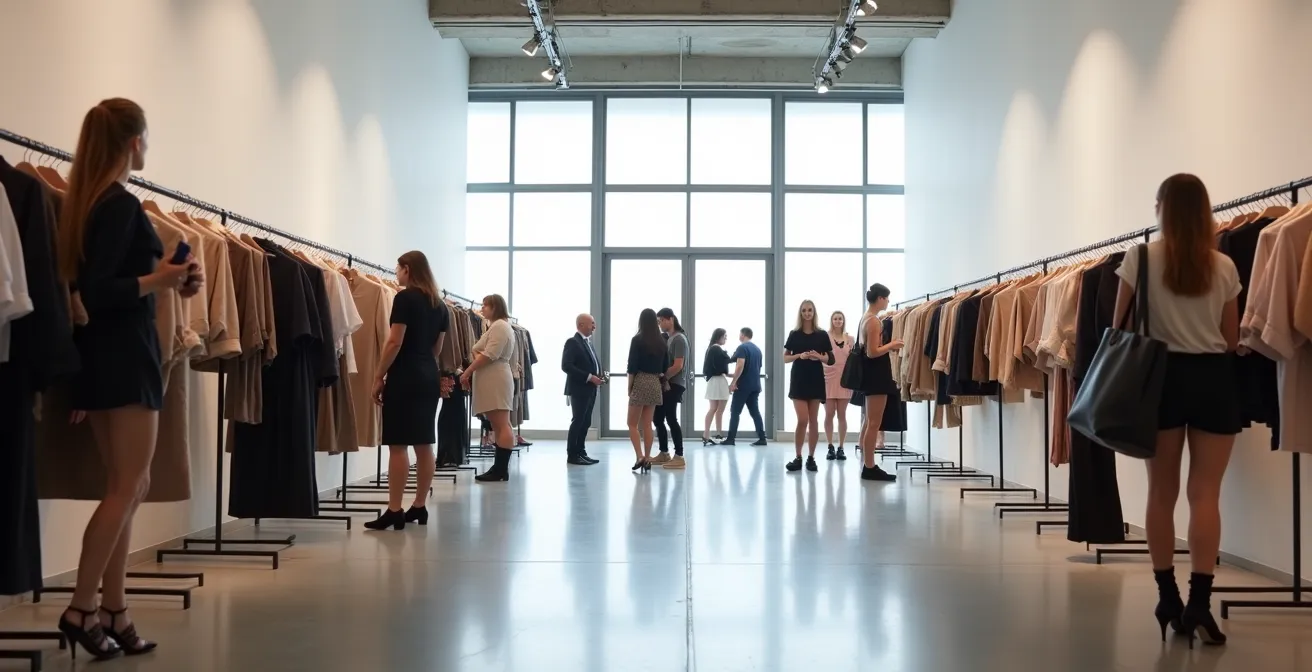
The true added value for the discerning visitor lies in the days immediately before and after the official shows. During this time, the atmosphere in the city is already electrified, the industry’s key players are on-site, but the bustle has not yet reached its peak or is already subsiding. This opens doors to a more authentic experience. It is the perfect time to focus on the numerous public side events, pop-up stores, and exhibitions that make up the actual creative heart of the event. Here you will find the inspiration and the pieces that are presented not on the big runways, but in the curated spaces of the city.
- Before or after the main shows: Plan your visit for the days right before the official start or after the end. The city is still “buzzing” but less crowded.
- Focus on side events: Concentrate on the rich offer of public events such as pop-up stores, panel discussions, and exhibitions in concept stores and galleries.
- Early reservations: Book tables at trendy restaurants like Borchardt or Grill Royal months in advance to experience the scene up close.
- Showroom visits: Use the time for shopping in the designers’ showrooms, which are often more accessible during Fashion Week and provide a more personal insight.
- Cultural framework: Visit the public exhibitions and presentations that often take place in museums and galleries, bridging fashion and art.
Frankfurt or Berlin: Which city offers the better clubbing experience for the over-30s?
The question of the ideal clubbing experience for an audience over 30 is less a matter of age and more one of standards. It is no longer about loud, overcrowded dance floors, but about a curated nightlife that offers excellent drinks, a sophisticated ambiance, and the opportunity for good conversation. Both Frankfurt and Berlin have much to offer here, but they cater to very different scenes. Frankfurt, as a financial metropolis, leans towards a polished, international business atmosphere, while Berlin maintains a more hidden speakeasy culture focused on individuality and curated niches.
The decision depends on whether you prefer a seamless transition from a business dinner to a chic hotel bar or would rather specifically seek out a hidden gem of cocktail art. The dress code reflects this: in Frankfurt, the business look is often the key to entry; in Berlin, a confident, individual style counts more than an expensive suit. The following table illustrates the central differences for a well-informed decision.
| Aspect | Frankfurt | Berlin |
|---|---|---|
| Scene Character | Polished, international business scene | Curated, often hidden speakeasy culture |
| Top Locations | Roomers Hotel Bar, Rooftop Lounges | Grace Bar in Hotel Zoo, hidden cocktail bars |
| Dress Code | Business look counts | Individual, confident style |
| Fine Dining & Drinking Synergy | Seamless transition in upscale hotels | Restaurant and bar often in the same building |
| Door Policy Tip | Hotel reservation as a door opener | Restaurant reservation provides access |
The true synergy lies in the seamless transition from a late dinner to a high-quality bar night, often even in the same building.
– Berlin Gastro Expert, Interview on the over-30s clubbing scene
As the expert highlights, perfection lies in synergy. In both cities, a reservation at the right restaurant is often the best way to gain access to the attached, exclusive bar. The choice of city is thus a choice of the preferred overall experience for the evening.
Why is the “White Gold” in the Zwinger globally unique and so valuable?
A detour to Dresden, to the porcelain collection in the Zwinger, might initially seem out of place on a trip focused on fashion and modern gastronomy. Yet, a closer look reveals the historical roots of what defines German luxury at its core: unsurpassed craftsmanship, technical innovation, and a timeless aesthetic standard. Meissen porcelain, often referred to as “White Gold,” is not just a historical artifact; it is the blueprint for the value sought today in a bespoke suit or a perfectly composed dish.
The uniqueness of Meissen porcelain lies in its history. It was the first hard-paste porcelain produced in Europe, thereby breaking the Chinese monopoly. This technical masterpiece, combined with incomparable artistic quality, established its legendary reputation and immense value. This value remains not only ideal but also material today. A well-preserved piece from the 18th or 19th century can be worth several thousand euros to millions, according to experts. It represents a stable, alternative investment that survives crises.
Case Study: Meissen as an Alternative Investment
The attractiveness of Meissen porcelain as an investment object is well-documented. Limited pieces in particular have high potential for value appreciation. During the Euro crisis, the manufactory recorded significant sales jumps; in the first five months of 2010 alone, the increase was around 30 percent. This shows that in uncertain times, investors trust the stable value of “White Gold.” An impressive example is the “Chronos 300” mantel clock: despite a price of 100,000 euros, the edition limited to ten pieces was equally sought after by collectors and investors and sold out quickly. This proves that outstanding craftsmanship has a price that connoisseurs are willing to pay.
A visit to the collection in the Zwinger is thus more than a museum visit. It is a lesson about the origin of luxury “Made in Germany” and an inspiration that sharpens the eye for quality and the intrinsic value of things—whether on porcelain, fabric, or a plate.
The Essentials at a Glance
- The symbiosis of luxury shopping and starred cuisine is no coincidence, but a curated ecosystem for a discerning clientele.
- The choice between metropolises like Munich (‘old money’) and Berlin (‘new money’) is a stylistic decision that shapes the entire experience.
- True German luxury, whether in fashion or craftsmanship like Meissen porcelain, is defined by quality and understatement, not by loud logos.
Why is “Less is More” considered the golden rule for the classic German business look?
The golden rule of “less is more” in the German understanding of luxury is more than just a fashion cliché; it is a deeply rooted cultural code. While in other cultures luxury is often demonstrated through the display of logos and opulent designs, in Germany it manifests primarily through understatement and flawless quality. It’s not about what you wear, but how it is crafted. A perfectly fitting blazer made of high-quality fabric or a mechanical watch from a traditional manufactory sends a stronger signal of status and connoisseurship than any shouting brand logo.
The ‘understatement’ is deeply rooted in the German Protestant ethos—you invest in the quality of a fabric or a watch, not in a loud logo.
– German Fashion Expert, Analysis of the German luxury market
This philosophy shapes not only the business look but also the way a luxury weekend is designed. It’s about selecting fewer but better pieces—both in the wardrobe and on the itinerary. A minimalist capsule wardrobe of high-quality basics is not only practical but also a statement. It testifies to self-confidence and a style that requires no external validation. The following list outlines the building blocks of such a wardrobe, perfectly suited for a weekend between an exhibition opening and a starred restaurant.
- A high-quality cashmere sweater in a neutral color (grey, beige, or navy blue)
- Perfectly fitting dark trousers made of premium wool
- A timeless blazer without conspicuous details
- Classic leather shoes (e.g., Oxford or Chelsea boots) in black or dark brown
- A high-quality watch as the only but expressive statement accessory (e.g., from A. Lange & Söhne)
- A structured white or light blue shirt made of Egyptian cotton
- A silk scarf or pocket square as a subtle, well-considered touch of color
When planning your next weekend, start by applying these principles. Do not just put together an itinerary, but curate an experience that reflects your personal style and where every choice—from the boutique to the restaurant—is an expression of the highest quality and cultivated taste.